

Original IP · Experimental
Mind Dojo
Case study
- Project type
- Thinking-skills game · Narrative system
- Audience
- Children · Years 3–6 (ages 7–11)
- Status
- Closed testing
Case study
The problem
Most learning apps reward quick answers. Mind Dojo is designed to help children notice how they think: how they understand a problem, find useful clues, choose a strategy, and explain what they did.
The story
The curriculum becomes a dojo journey guided by Sensei, an ongoing mentor rather than a disposable chatbot. The relationship gives abstract thinking skills a character, a place, and a sense of progress that can develop over time.
The evolution
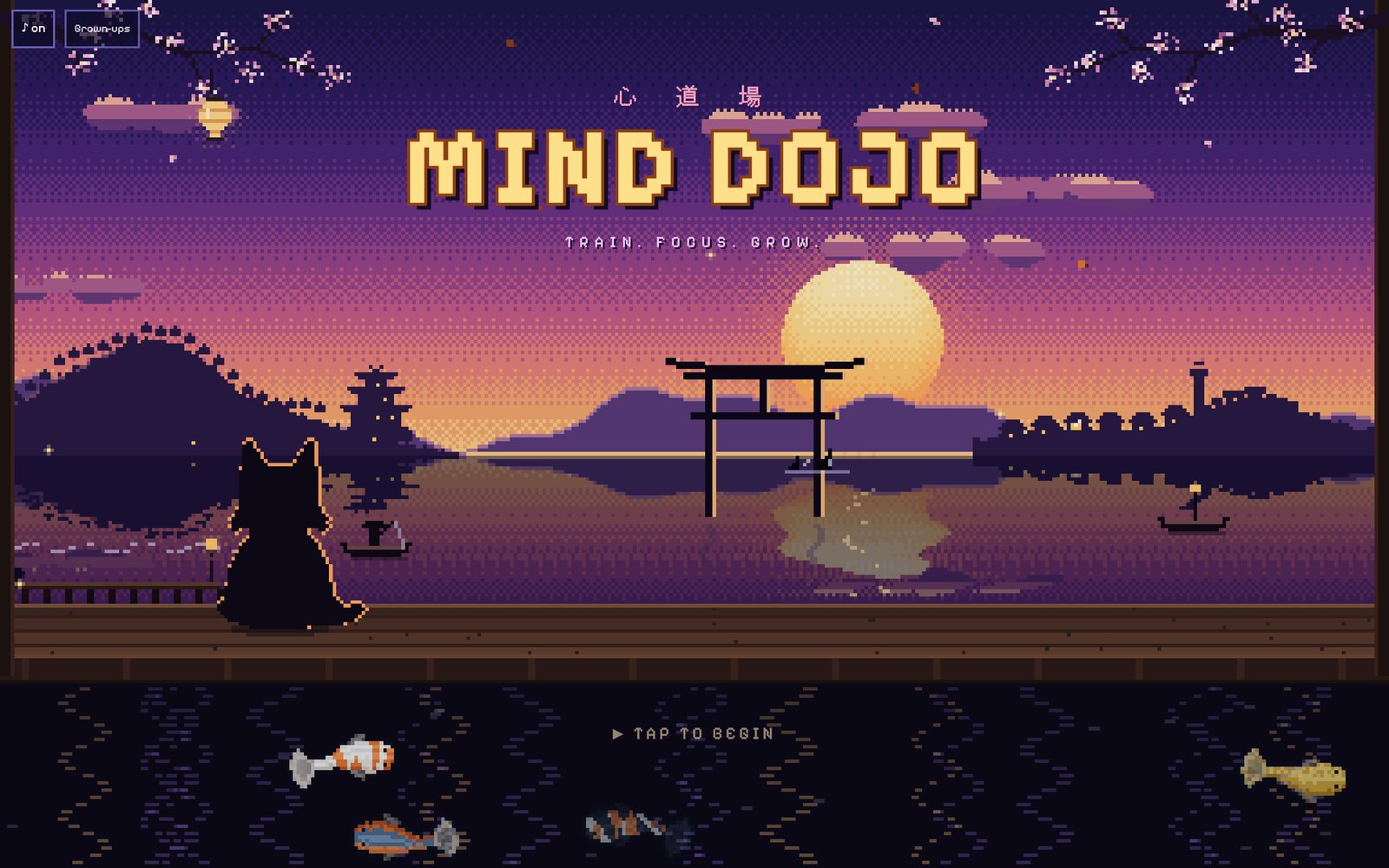
Mind Dojo began as a painted, anime-style prototype. In 2026 it was rebuilt from the ground up as a 16-bit pixel-art world, a leap in style and presentation that current tools made possible for a very small team.
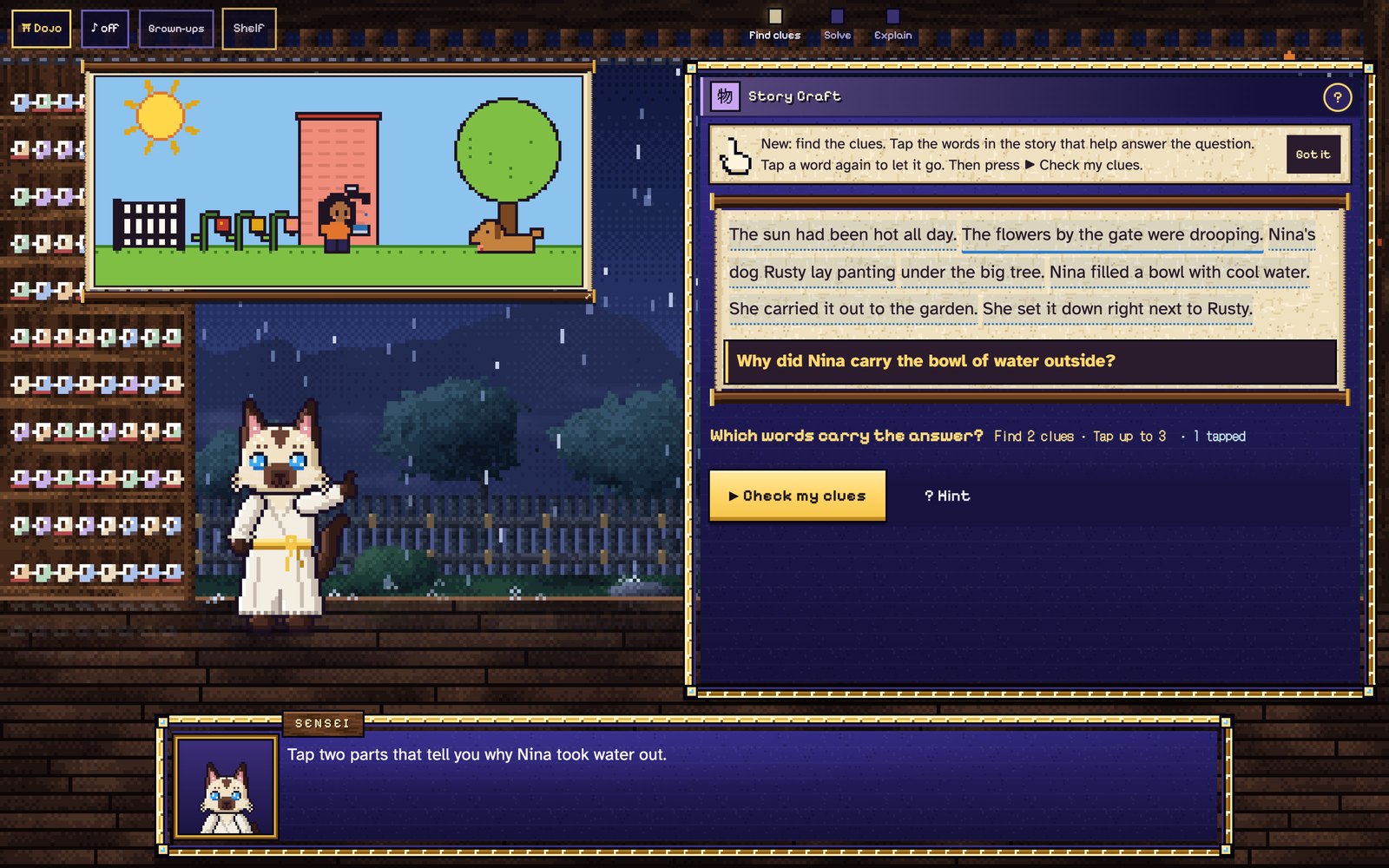
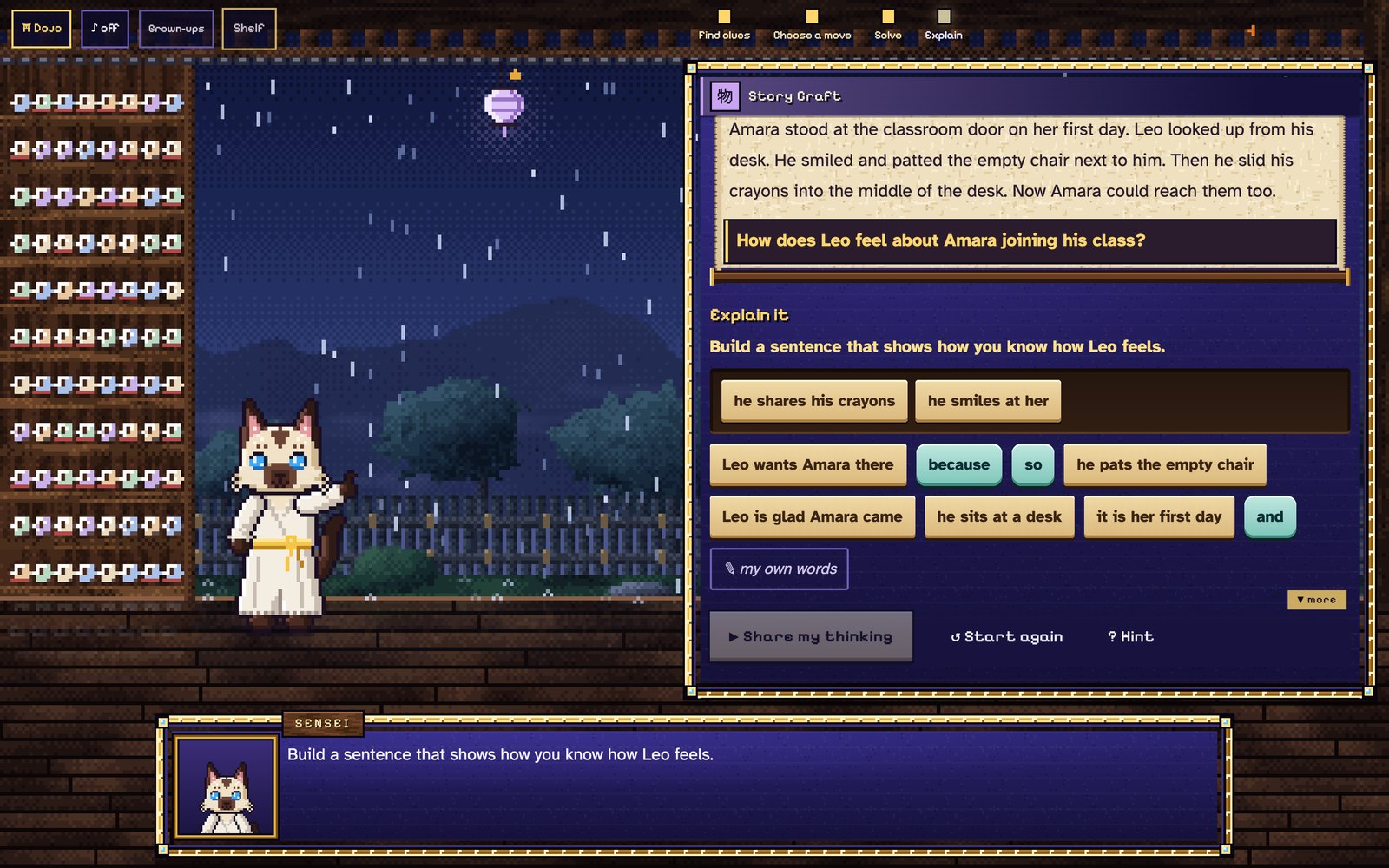
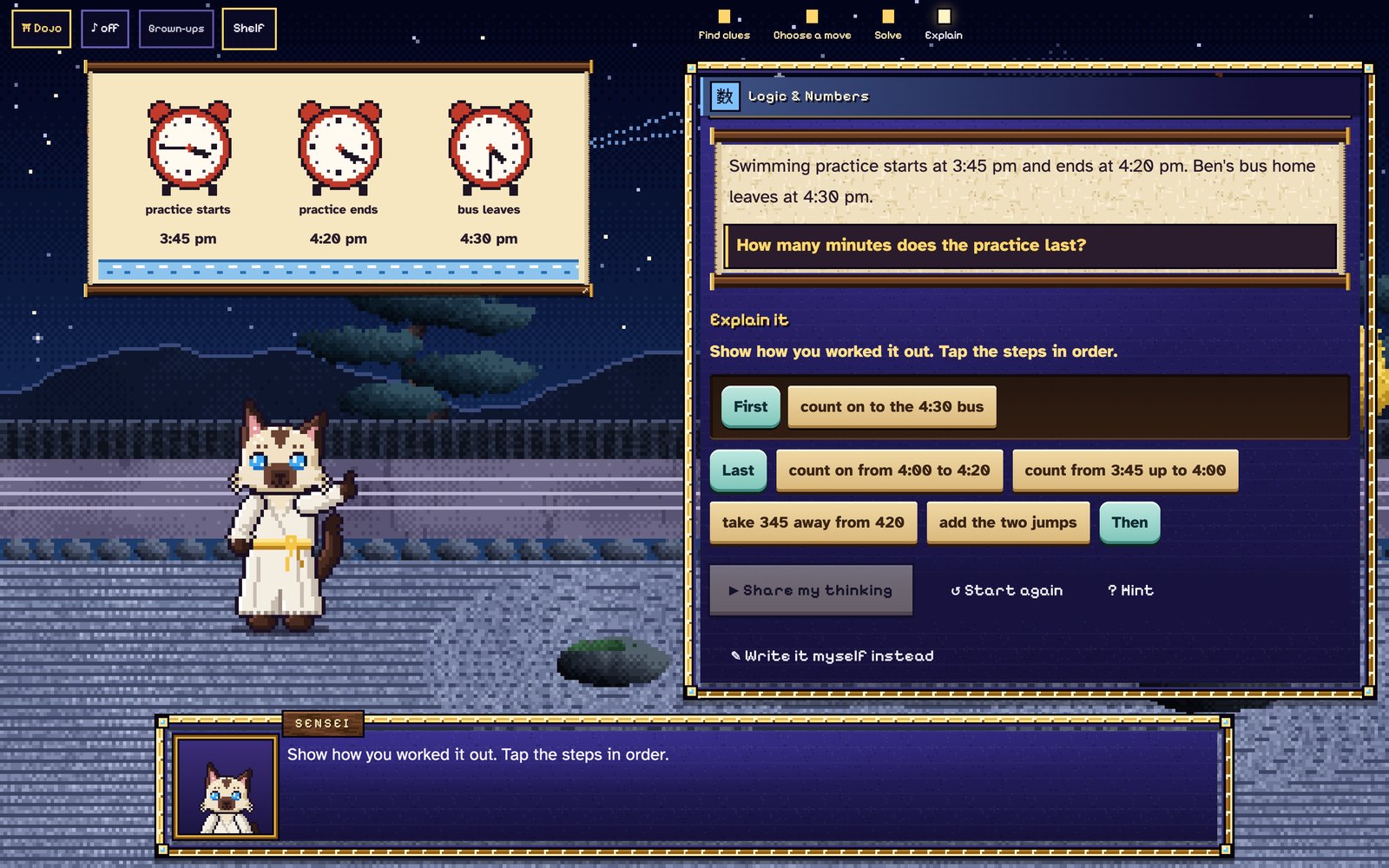
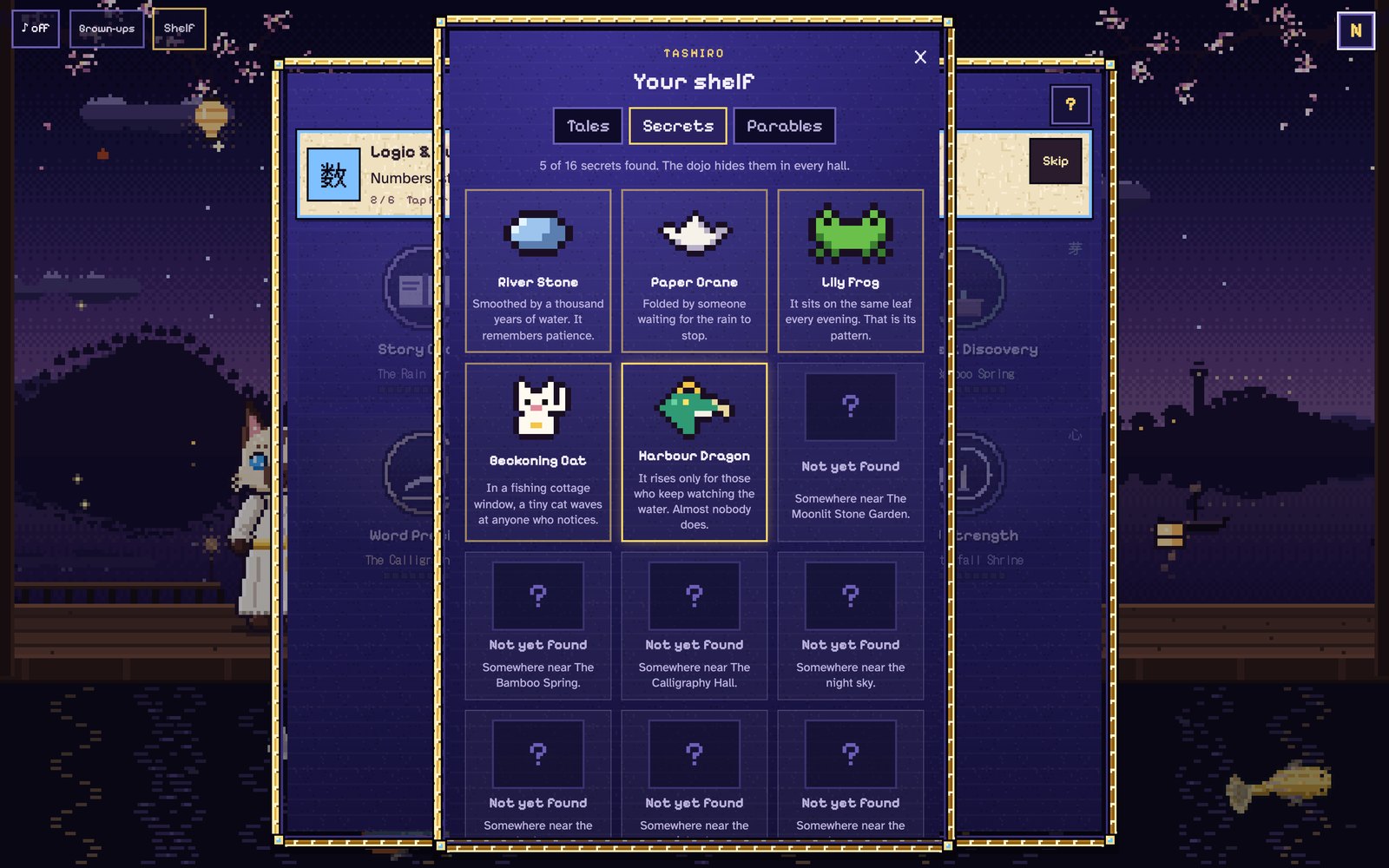
The rebuild brought far deeper interaction, animation and engagement: a living island of seasons, cats, koi and sky lanterns; word blocks and step builders, so younger children can show their thinking without wrestling a keyboard; a cat Sensei with his own recorded voice, shrine talks and parables; and secrets hidden across every hall. It is now in closed testing with families and a primary teacher.
The system
Each challenge follows a five-stage thinking loop: understand the goal, find the clues, choose a strategy, solve, and explain. Six disciplines turn that process toward logic, language, science, story, patterns, and resilience.
The pedagogy, boundaries, and emotional tone remain deliberately authored: process over speed, curiosity over shame, and feedback a child can actually use. No timers, no streaks, no ads, and nothing a child types leaves their device.


In development · Closed testing
Mind Dojo is on my bench right now.
A thinking-skills adventure for kids. A gym for the mind, not a test.