
Games · Experimental
The Kestria Crisis Series
Case study
- Project type
- Interactive drama series · Writing · Narrative design
- Length
- 7 to 30 minutes per game
- Platform
- Browser · designed for mobile · best with sound
- Status
- Three playable prototypes
Case study
The series
Kestria is a small, cold, proud European nation that depends on imported energy and on everyone believing the same version of events. It doesn't exist. Every crisis that hits it is one we've watched build in the real world.
Each game takes away one thing a country can't run without. Grey Night takes the light. Pale Rider takes the safety of touch. Black Days takes the truth. Same towns, same people, so a returning player feels the echoes: "not again" when a city goes dark.
In a real crisis, there are no winners. Only losses to learn from.
I · Grey Night
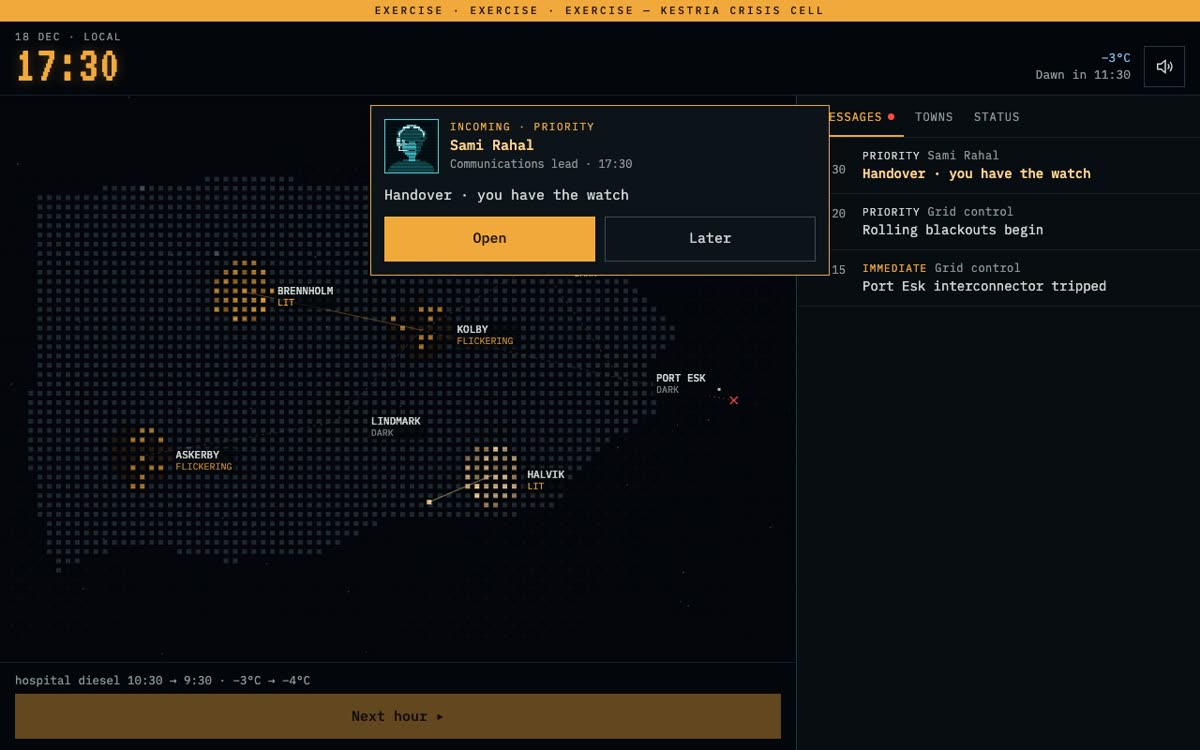
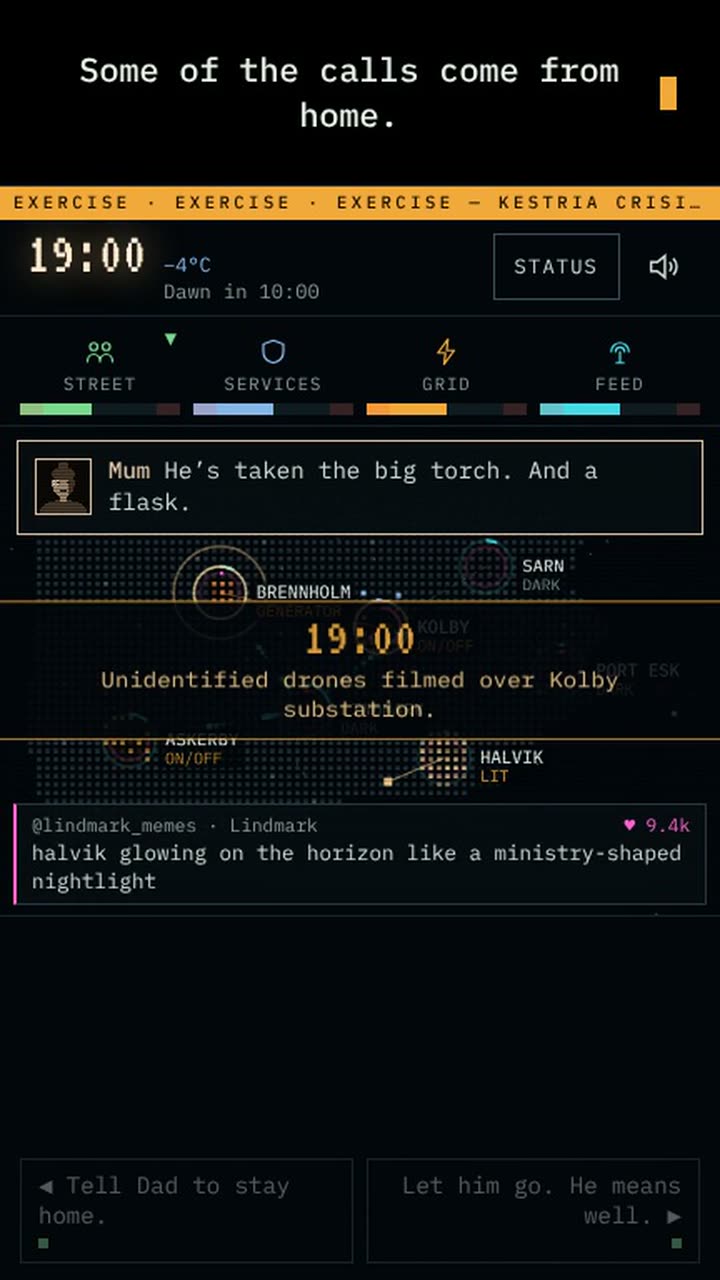
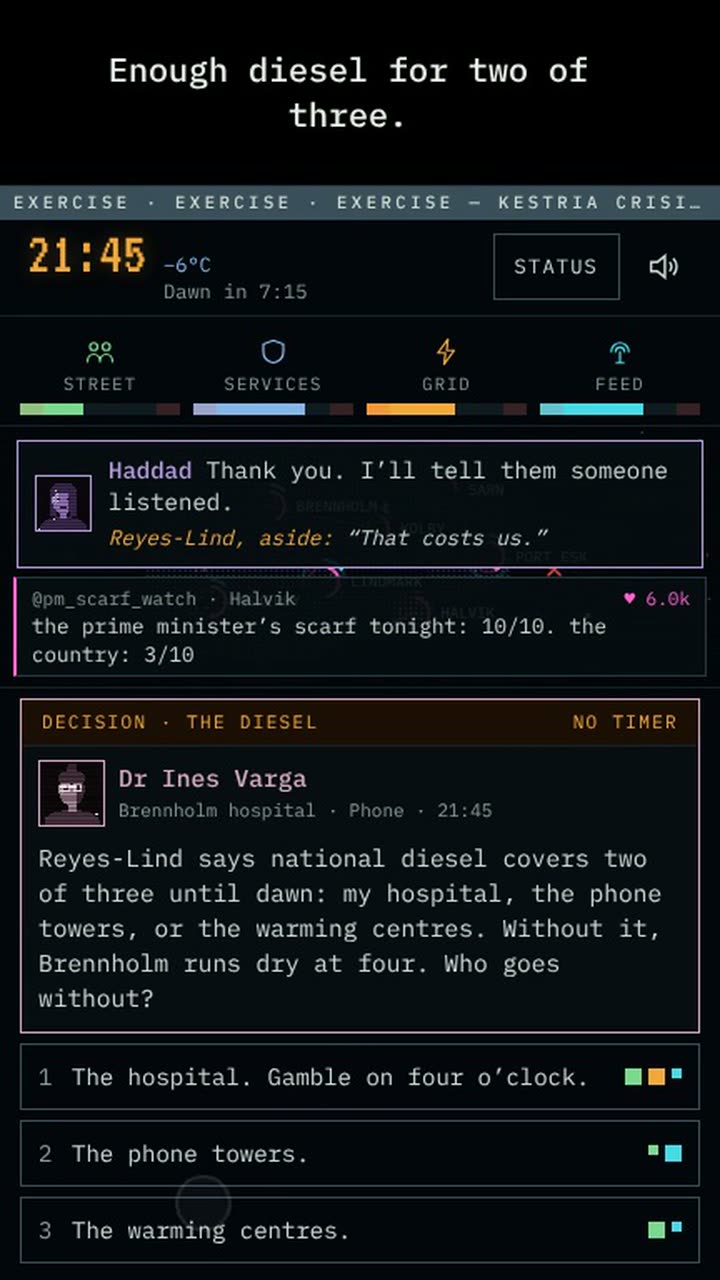
One winter night. An undersea cable trips, half the country goes dark, and an election is five days away. You run the crisis cell until dawn while drones are filmed over a substation, rumours outrun the facts, and your own mother keeps calling.
About seven minutes, played on a phosphor CRT. You never find out who cut the cable. You find out who your neighbours are.
II · Pale Rider
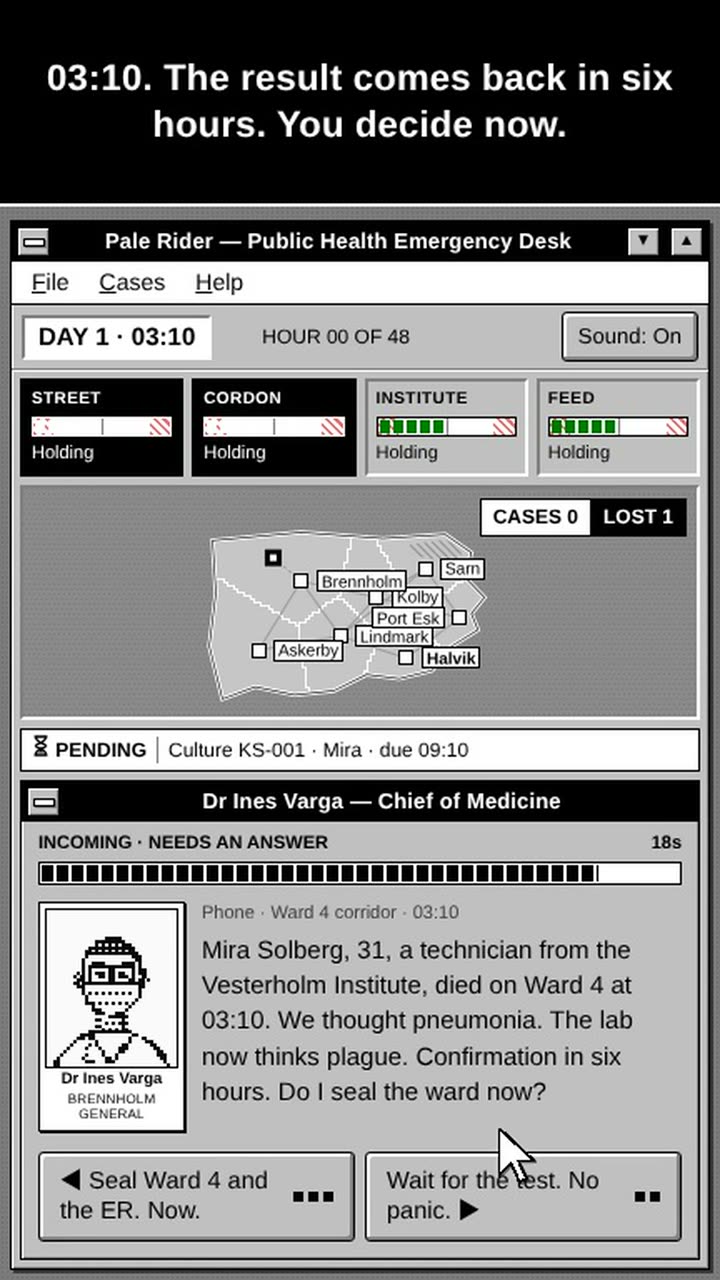
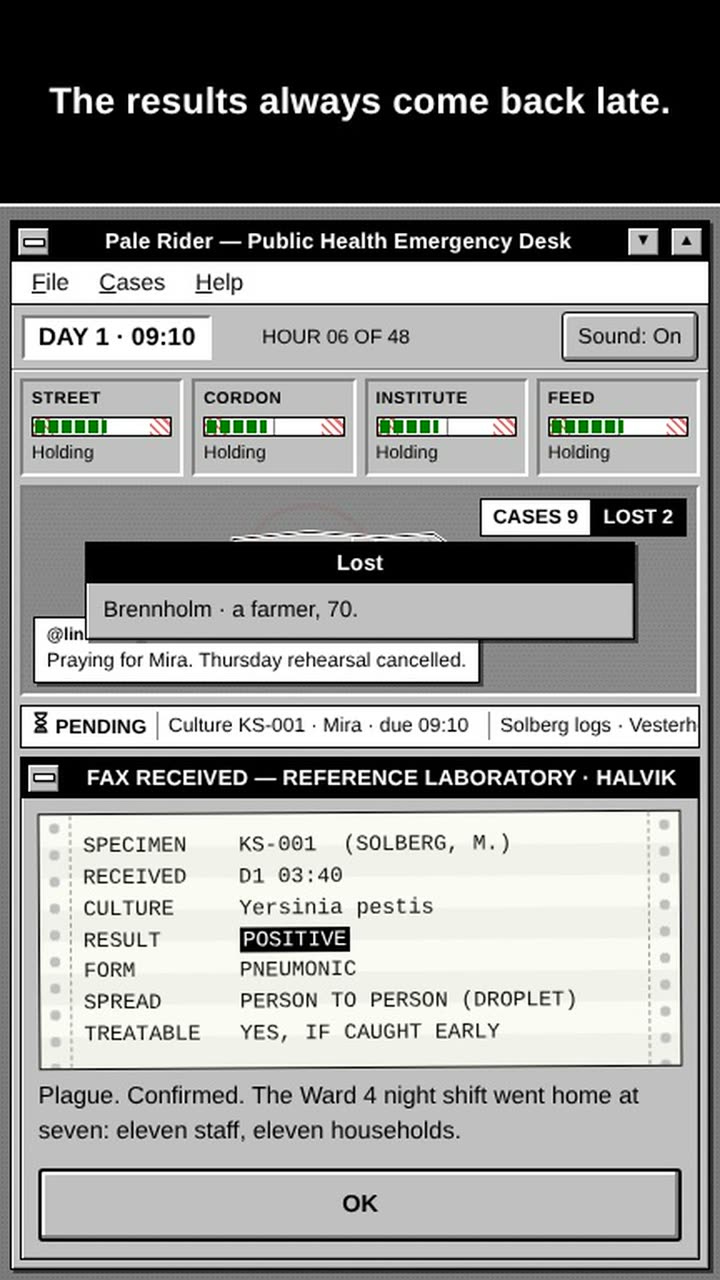
A lab technician is dead of pneumonic plague. Was it a lab accident or a natural outbreak? You run the public health emergency desk for 48 hours, and every result arrives after you have had to decide.
A Windows 3.1 skin, faxed lab results, and a General Protection Fault when a gauge breaks. Twelve endings, and the evidence stays consistent with both stories, by design.
III · Black Days
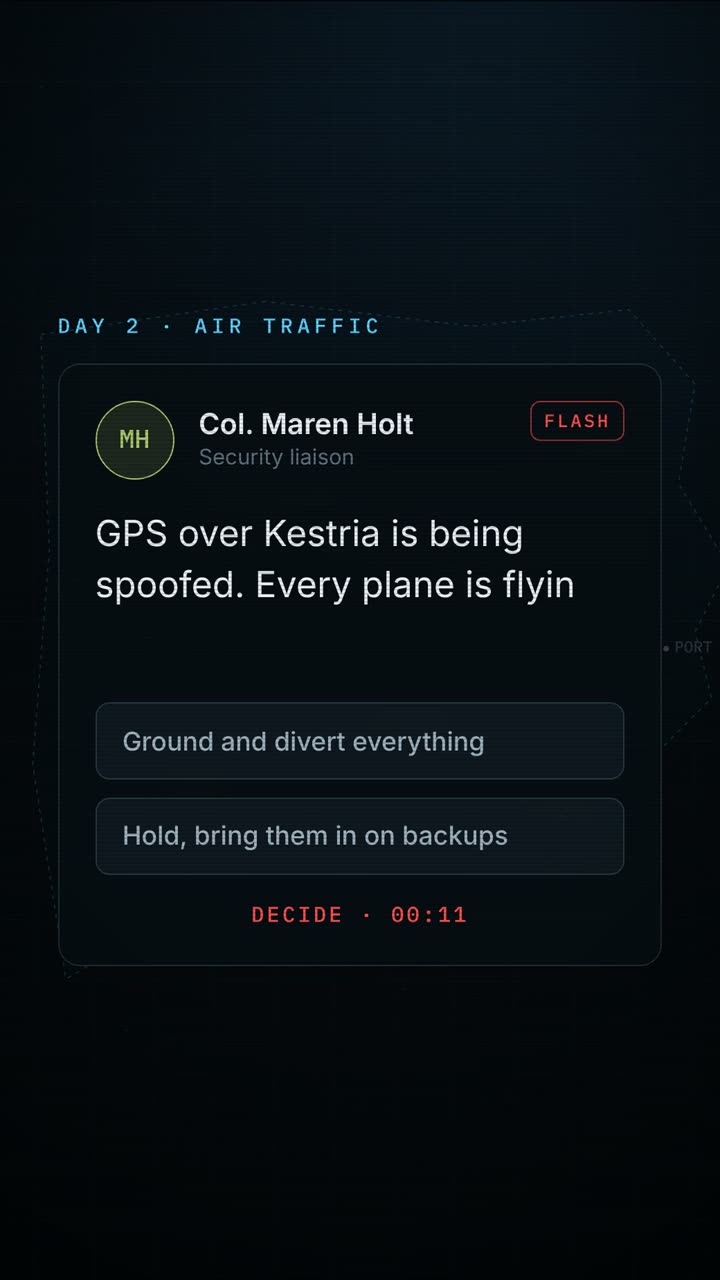
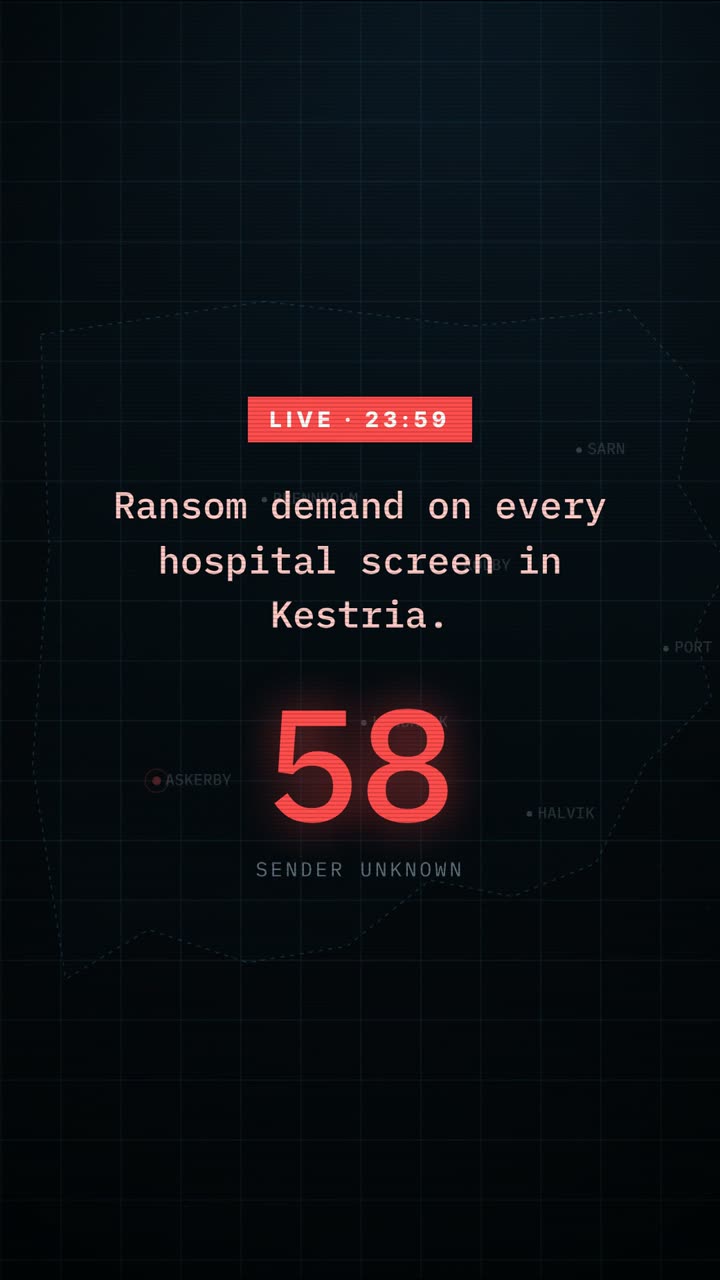
Three days of attack on Kestria's systems. Nothing has to blow up for the country to fall. What fails is knowing what's true on your own screens.
One of your gauges is lying. A fake text arrives from your partner, and only knowing how he really writes gives it away. The attacker adapts to how you played the day before, an insider is drawn fresh each run, and the attacker is never named: the last choice is whom you blame. Eight endings, 20 to 30 minutes across three nights.
The design
Every gauge fails at both ends, and the gauges are paired as rivals: hold up the public and you lose the cordon; feed the military and the economy bleeds. Favour one side for too long and the other one gets you.
People are counted by name, not as numbers. A ledger of who was lost runs underneath the gauges and never resets. The source of each crisis stays ambiguous; the negligence behind it never is.
Every run ends by looking back. Grey Night and Pale Rider close on a full after-action review: a replay of the map, which call decided it, what you decided blind, the road not taken, and a facilitator view with discussion questions and an exportable decision log, built for workshops and training rooms.
Fully fictional. No real state, party or person.
See it played
All three run in the browser, best with sound. They're shared privately: request a demo and I'll send you a link, or walk you through one live.
In development · Three playable prototypes
The Kestria Crisis Series is on my bench right now.
Three crises. One nation. No good choices.